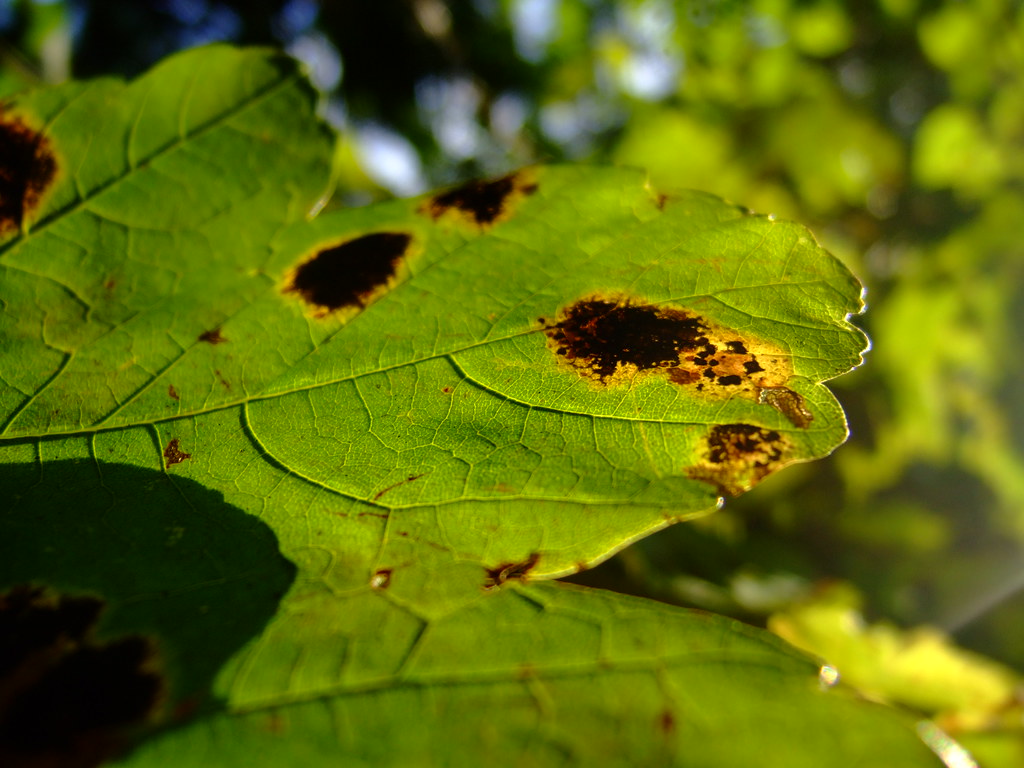
Have you ever seen one of those carvings in an old tree by young (or not so young) lovers, with their initials cut into the bark to signify that they were here, and give a lasting monument to the magnitude and endurance of their love?
We have a tree in our local woods that came down in a storm a couple of years back, but it previously had a few such carvings.
I always wonder whether those with dates on were genuine, or that the inscriber had deliberately used an already passed date to make the carving appear much older than it was.
Anyway, the way my photography has been trickling along, and perhaps gathering a little more momentum again, my tree carving would probably say DJ 4 CCD 4 Ever.
CCD are not the initials of my wife or any other human in my life (she would be pleased to hear), but the type of sensor used on earlier digital cameras.
Now if you want the science behind them, and technical comparisons between CCD and the now ubiquitous CMOS sensors, please feel free to do your own research, there have been millions of words written about them online.
My more simplified and anecdotal experience is that the digital cameras I’ve enjoyed most – and the ones remaining in my core arsenal after playing with at least a hundred in the last few years – have CCD sensors.
My Pentax DSLRs, the K100D, K-m and Samsung branded GX-1S, a clone of the Pentax *ist DS2, are all CCD.

My most capable Panasonic Lumix, the LX3, is CCD, as is my surprisingly lovable (well, it is a bridge camera) FZ38.
And even the much later XS1 (2013 I believe, so it’s a mere 10 year old!) has a CCD sensor, albeit a tiny in size but surprisingly high in MegaPixels (16MP) one.
Two aspects stand out with the CCD cameras, aside from the other charms of the specific models I’ve mentioned above.
- The images look less digital and clinical, more organic and natural.
I was well into digital (phone) photography before I explored film around 2012, so I wasn’t a photographer raised on a different medium then coming into a new one. But even so I found many digital images too, well, digital, even though I wasn’t directly comparing them to film photographs (as at that time I hadn’t shot any film myself).
Regular readers, if any remain here, will know that I generally take most of my photos out in nature of leaves, flowers, decaying bark and crumbling stone walls, and these subjects just seem to appear more tactile and appealing shot with a CCD camera.
- Colours look better.
Again it’s a natural thing. Later cameras I’ve used usually make colours appear too sterile and cool, and/or too blue and green.
As was borne out by my Colour Quest series of explorations and posts, again the CCD cameras give me lovely colours straight out of camera, without needing to spend hours tweaking profiles in LightRoom, or even a few minutes or less in Snapseed.
Most recently I’ve revisited the LX3, prompted not least of all by Paul‘s consistent sharing of photos he’s made with his in the PentaxForums CCD Sensor Cult thread.

I’ve also dusted off a camera I thought I’d given away in one of my purges, but was pleased to find I hadn’t, the FujiFilm FinePix E900.
It looks almost like a little bridge camera with its DSLR type grip but is much smaller.
The E900 is generally lovely to use, and the 9MP “Super CCD” sensor delivers pleasing images.

I like using the F-Chrome colour setting (there are only three colour settings, F-standard, F-Chrome and F-B&W) which gives a warmer, golden hour-like hint to the images.
It even shoots RAW, for those who like that sort of thing, but you probably recall I’m a straight out of camera JPEGs kind of guy.
In the coming weeks, I’m hoping to photograph a little more frequently (autumn is my favourite season) and also hopefully, post more often on Flickr and here on 35hunter.
How about you, what’s your experience of CCD sensors?
As always, please let us know in the comments below (and don’t forget to tick the “Notify me of new comments via email” box to follow the conversation).
Thanks for looking.
What Next?
Share this post with someone you think will enjoy it using the buttons below.
Read a random post from the archives.
See what I’m up to About Now.

 35hunter
I have 4 CCD cameras, a Canon ixus 300 with a massive 2.1mp a Sony S80 which gives surprisingly good images in good light, a Olympus C8080wz sort of bridge camera and a Olympus E400, the Olympus cameras give great colours.
Thanks for your comment!
I’ve had two or three little Canons and have liked them. I had one of the Powershot A series for a while too, a 7MP one I think, and really liked that, the handling was similar to the FujiFilm E900 I mentioned above where the batteries go in the grip and give it great ergonomics.
The Olympus E300, E400 etc get mentioned quite a bit in the CCD thread on Pentax Forums, I’d like to try one one day but they’re still pretty expensive compared with the peanuts I usually spend on cameras!
This is interesting. On a whim I bought a $50 used Nikon D60 body (which is CCD apparently) and tried shooting the same stuff I shoot with my Nikon D5500 to see if I could get comparable work…and a lot of it really stands up to the much more advanced CMOS camera. In fact it captures roses in particular a lot better than the D5500 ever has without extreme post-processing, though it took a minute to get a grip on doing post-processing with the new camear; the sensors really do portray the same subject matter in terms of coloration, etc. very differently.
Thanks Adam. I’ve looked at Nikon CCD bodies like the D40 and D60 numerous times, they seemed to be treasured amongst CCD lovers. What’s stopped me is I have no Nikon lenses so it’s always been easier to pick up another cheap Pentax body as I’ve had K mount and M42 lenses for years. I might have to to look at the Nikons again plus one 35 or 50mm lens!
CCD all the way. That is all I use. 2 Pentax K10D’s a Pentax Optio E90, and Nikon Coolpix A10. Great blog post Dan!
Thanks Frank, good to hear of another CCD lover.
I couldn’t resist looking at the Optio E90 (despite owning dozens of film and DSLR Pentax cameras I’ve never had a Pentax digital compact) and have just bagged one on eBay for a tenner.
It’s like a mini K10-D, Dan.I keep it in my pocket all the time, as I have a flip phone and not a smartphone. Enjoy!!
Great, looking forward to receiving it next week, I’ll post an experience report here in a few weeks hopefully. I like that it uses AA batteries too, like the FujiFilm E900.
Frank, guess what arrived with the postman today? The little Optio E90. Really impressed so far, love the rubberised grippy cover and the hand grip bulge where the AA batteries go. Why didn’t more manufacturers do that instead of making such flat, shiny, slippery bodies!
Indeed, Dan, nothing else like it, I agree. I love the images from that sensor as well. The batteries last a long time, though I don’t use the flash much. Enjoy! Looking forward to what you have to share about this gem.
Brilliant post. I’m also a huge CCD sensor fan, the colours seem lovely to me. I bought a couple of old digicams just because they had Kodak CCD sensors. I use my Pentax K100D regularly and love the results. There are some older DSLRs from Fujifilm, Sony and Nikon that have great CCD sensors also.
Thanks Lee. The Kodak CCD sensors do seem to be mentioned often! I believe the 6 and 10MP Pentax DSLRs have Sony sensors, the same is in the early Sony A/Alpha cameras like the a100.
Useful to know, thanks. I heard good things about Olympus E-500 CCD sensor and the Fuji SuperCCD EXR range of digicams.
I’ve owned three FujiFilm cameras, that I can remember. The FinePix E900 mentioned above, the F810, which was quirky but capable of lovely pictures, and the S7000 which also performed beautifully and looking back at the images now I wonder why I got rid of it. But I think because it wasn’t quite as controllable as a not much bigger DSLR like my Pentax K100 or Samsung GX-1S, but too bulky to be a compact like the LX3 (or the other two FinePix cameras mentioned). Aside from my Lumix FZ38 which somehow doesn’t feel like a bridge camera, I’m not entirely sold on bridge cameras as a concept and think they fall between two stools.
Anyway, those Super CCD sensors do have a certain magic in the right conditions. I don’t really know the EXR range.
The Olympus E series often appear favourably in the Pentax Forums CCD thread.
I’ll mention the Sony F828 which not only has a CCD sensor but adds a fourth colour (RGBE), where the E is for emerald. I like the colour rendering but tend to use it mostly for infra-red, taking advantage of the magnet “hack” which gives it a dual-purpose capability, and this doesn’t give the E much scope for effect, with a 720nm filter and the inability to set a suitable white-balance in-camera producing a magenta cast which a little processing (using Picasa for simplicity) converts to my B&W preference.
Liked your posts, Dan, so I’m hoping you’re are back in harness.
Thanks Terry, very interesting camera. I was looking at a very similar shaped Sony a while back, but can’t recall the model exactly. Think it was one of the first non DSLR cameras to have an APS-C size sensor, plus a pretty mighty range zoom lens. Sony have made some very intriguing cameras. For some years I had Sony phones with 3 and 5 and I think the last one was a 6MP camera, and they were also fun to use and well optimised physically as cameras with a “proper” shutter button and so on, not like the touch screen everything camera phones these days.